
PharmaLectures.com

Courses › Pharma sales skills and selling across cultures › Selling to Japanese and Korean buyers when you are from Europe: how they decide, what loses the deal

Selling to Japanese and Korean buyers when you are from Europe: how they decide, what loses the deal

Your reps stop losing Tokyo and Seoul deals to a silence nobody explained.

  • 8 audio modulesthree lengths each
  • 1 h 20 min to 6 h 40 minbriefing to expanded
  • Workbook, transcript, certificateand a recorded quiz per module
  • Europe saleswho it is written for

Why this training matters

Your rep leaves Tokyo sure the meeting went well. The buyer smiled, nodded and took the deck. Then the emails stop, and months of travel leave nothing your director can explain at the pipeline review.

What changes after this course

Your reps spot who really decides, hear a polite no before it turns into silence, and follow up in a way that keeps the buyer moving. You hold a certificate per learner and a training record for each person.

Watch the pitch

3:43 on how an audio course is bought, listened to and recorded. Full screen, one click.

Watch the pitch3:43, full screen, one click

What this course gives your people

Your rep walks into the first Tokyo meeting knowing who holds the real say, how to hand over a meishi, and where to sit. The introduction ends with a date for a second meeting, not a polite silence that nobody can explain to the director back in Europe.

Questions about quality stop catching your team out. Reps put the quality control evidence up front and frame it around Good Manufacturing Practice, so a Japanese or Korean buyer sees a supplier who checks as hard as they do. The discount stops being the opening offer.

The wait stops being a mystery. Your account managers sketch the ringi-sho path, name who must stamp the document, and give the sales director a forecast that holds up. They also stop sending the chasing email that costs you the buyer's goodwill.

When the room goes quiet, your rep has a next move. A softer question, a pause, a note sent the same day. Small acts like these leave the buyer feeling respected enough to say what is really holding the deal.

Who needs this training

  • European Pharma Sales Manager

    Your team comes back from Seoul sure the buyer liked them, and then the calls go unanswered. You give them the signals to read before the next flight is booked.

  • Key Account Manager, Asia Markets

    The buyer's quality team asks detailed questions about your processes. You answer in the order and terms they check, and the answers hold up in the room.

  • Business Development Director, Asia-Pacific

    Your pipeline shows Korean deals stalling at the last step. You give your board a timeline based on how the buyer actually reaches agreement.

  • Export Sales Executive

    You are about to enter a Tokyo boardroom for the first time. You know who to greet first and avoid the slip that ends a deal on day one.

Roles: Owner, CEO and board, Business development and export sales, Marketing and communications

Businesses: every kind of pharma company

Countries: Europe

Selling into: Asia Pacific

Courses are in English. Other languages on request.

After this course your people can

  1. Point out the likely decision-makers and quiet influencers in a Japanese or Korean meeting room from where they sit and how they speak.
  2. Exchange meishi business cards in the right order and manner for the rank of each person present.
  3. Build a pitch deck that puts long-term reliability ahead of short-term savings.
  4. Draw the ringi-sho approval path for an account and give your director a realistic window for the signature.
  5. Write a follow-up email that confirms the next step without rushing the buyer.
  6. Answer buyer questions on compliance using the correct Good Manufacturing Practice terms.

What the company gets

  • Travel budgets stop disappearing into Asian deals that die after the first trip, because your reps know what the first meeting must achieve.
  • Sales directors get pipeline forecasts that reflect the long approval process, so the board stops being surprised by deals that slip.
  • Your proposals arrive in the form Japanese and Korean quality teams expect to check, so the first review is not a quiet rejection.
  • You build lasting relationships with buyers who reward loyalty, rather than restarting every account with a discount.

The evidence: questionnaire, training record, certificate

EU GMP Chapter 2, section 2.11, and 21 CFR 211.25 both ask for training that is documented and shown to work. This is what each learner leaves behind.

A recorded questionnaire per module

Every one of the 8 modules ends with a multiple-choice questionnaire. The result is recorded per person with a timestamp, whichever of the three lengths the person listened to.

A per-person training record

The export lists each learner, each module, the result and the date, which is the training record EU GMP Chapter 2 and 21 CFR 211.25 ask you to keep and the first thing an inspector asks for.

A certificate per learner

Name, company, course, hours, the guideline version taught and the date. It documents in-company training; it is not a professional qualification or an accreditation.

Your pass mark, your rule

There is no fixed pass mark. Your quality or human-resources manager decides what counts as passed and when a module is retaken, exactly as your training procedure says.

Delivered within 72 hours of payment, with the workbook, the full transcript and a source for every fact in the audio.

How long it takes, by who is listening

Nobody spends a day in a classroom. Every module exists in three lengths; a person takes the length their role needs, and every length ends with the same recorded questionnaire, so the training record is complete either way.

Briefing1 h 20 min10 min a module, for executives, sales and anyone who must know the rules, not run them
Standard3 h 20 min25 min a module, for regulatory, quality and business-development staff
Expanded6 h 40 min50 min a module, for technical staff who run the procedure day to day
Who takes this courseLengthTotal time
Business development and export salesBriefing1 h 20 min
Owner, CEO and boardBriefing1 h 20 min
Marketing and communicationsBriefing1 h 20 min

Course outline: 8 modules

8 modules. Under each title are the three things the listener can do afterwards; the audio itself runs 10 to 50 minutes depending on the length chosen.

  1. 1Read the signals behind a smile, a nod and a pause in Tokyo and Seoul

    • Why a Tokyo buyer's 'we will consider it carefully' usually means no, and what to ask next.
    • How to protect a senior Korean buyer's kibun, meaning mood and feelings, so the room stays open to you.
    • What the gap between honne, the real view, and tatemae, the public face, tells you after a pitch.
  2. 2Run a first meeting in Tokyo or Seoul that earns you the second

    • How to exchange meishi, the Japanese business cards, so the first impression is settled before you sit.
    • Where to sit and who to address first so the buyer's hierarchy reads as respected, not ignored.
    • Why your fast European agenda reads as pushy in a first introduction, and the slower one that works.
  3. 3Use indirect phrasing that keeps Asian pharma buyers talking

    • What to do when the room goes quiet after you show your price, and the move that keeps the deal alive.
    • How to phrase a question so the buyer can raise a concern without having to say no.
    • The body language that tells you a proposal is not landing, before the buyer says anything.
  4. 4Build the long-term trust Korean and Japanese partners need to sign

    • Why the dinner after the meeting can matter more than the meeting, and how to behave at it.
    • How to use nunchi, the Korean sense of reading the mood, before you ask for any commitment.
    • When a corporate gift helps and when leaving it at home makes you look unprepared.
  5. 5Map who approves what in a Japanese or Korean buying decision

    • How the Japanese ringi-sho, the circulated approval document, explains why your answer takes months.
    • How to find the quiet influencers who can veto your contract without speaking in the meeting.
    • What to tell your sales director who wants a closing date for an Asian account.
  6. 6Avoid the small insults that end European deals in Asia

    • Why pushing for a quick signature costs you credibility with a buyer who needs agreement first.
    • The moment impatience reads as disrespect, and what to say to pull back before it lands.
    • How to recover when a junior colleague speaks out of turn to a senior Asian executive.
  7. 7Present your product and quality data the way Asian buyers check it

    • How to arrange your quality data in the order Japanese and Korean buyers expect to check it.
    • The quality control slides to add to your deck before a Japanese team sees it.
    • Why reliability over years beats a lower first price in Seoul and Tokyo.
  8. 8Write follow-up emails that keep the buyer moving without pushing

    • How to write a follow-up email that respects rank and names the next step without pressing.
    • What to send during the long quiet weeks while the buyer builds agreement inside the company.
    • The support rhythm that keeps a competitor from walking into an account you opened.
The founders

One of us was inspected. The other one pays for the training.

Every claim below is sourced on the about page: the medicines register, the Lithuanian Pharmaceutical Union board list, the university directory.

Justina Krukonytė-Racz

Justina Krukonytė-Racz

Co-founder. Licensed pharmacist.

GDPResponsible PersonWarehouse & logistics

Licensed pharmacist. Responsible Person at Tamro (PHOENIX group), where she led the GDP set-up of the distribution centre.

The Responsible Person is the named person the regulator holds accountable for every pallet that leaves the building.

She writes the modules around the procedures a GDP inspection checks. Board member of Lithuanian Pharmaceutical Union.

Listed in the Lithuanian medicines register as Pharmacist.
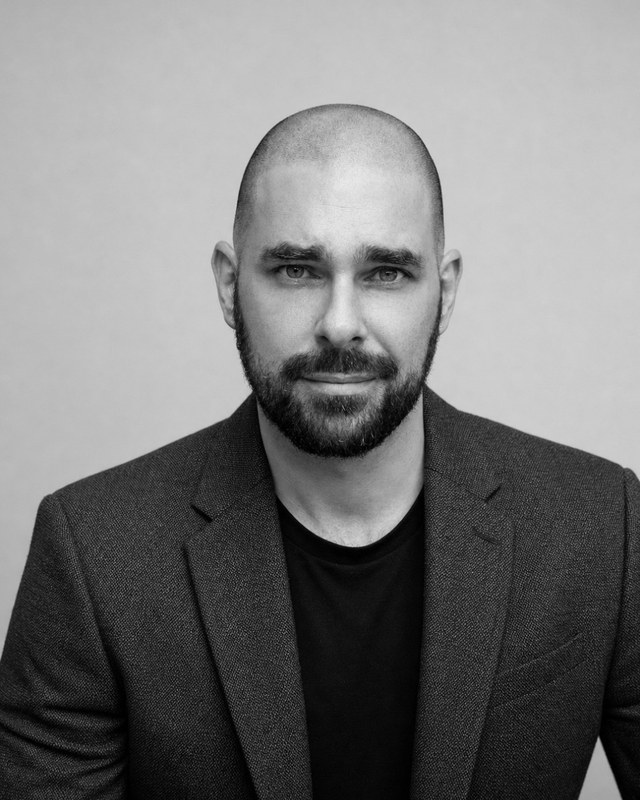
Prof. Ben Racz

Prof. Ben Racz

Co-founder. Builds the platform and is responsible for delivery, records and pricing.

Platform & deliveryQuantitative researchCarnegie Mellon

He was Professor of the Practice at the College of Engineering at Carnegie Mellon University, where he taught Advanced Quantitative Finance and Algorithmic Trading to MSc students.

He is the founder and Managing Director of Algorithmic Sciences, a scientific research and consulting firm. Earlier he co-founded a data-driven growth consultancy, a data-science based wholesale trading company and an information security firm.

More about Ben at benracz.com

Questions about this course

Is there a certificate?

Yes. Every learner who finishes the course receives a certificate in their own name, and every module ends with a recorded multiple-choice questionnaire, so the certificate sits on top of a per-person training record. The certificate documents in-company training; it is not a professional qualification or an accreditation, and your quality or human-resources manager sets the pass mark and decides when a module is retaken.

How long does the course take?

8 modules, each in three lengths: a 10-minute briefing, a 25-minute standard run and a 50-minute expanded walk-through. The whole course takes 1 h 20 min in the briefing length and 6 h 40 min in the expanded length. People take the length their role needs, and every length ends with the same recorded questionnaire, so the training record is complete either way.

Who should take this course?

It is written for Europe sales. Owners, managers and sales staff hear the briefing length, regulatory, quality and business-development staff take the standard run, and the people who run the procedure every day get the expanded version. One licence covers one named person on this course for a year, so the same title can be rolled out across a whole team at once.

Is this training accepted as a GMP training record by an auditor?

EU GMP Chapter 2 and 21 CFR 211.25 require documented, effective training, and that is what the course produces: a recorded multiple-choice result per module and per person, a certificate per learner and a transcript of what was taught. No provider can promise acceptance by a specific inspector; the record is built to answer what inspectors ask for, and your quality manager decides the pass mark.

How is it delivered and how fast?

The course arrives as audio files with a companion workbook, a full transcript and the questionnaire per module, within 72 hours of your payment arriving. You host the files on your own system or share them as you like; there is no platform to log into and no learner management system to set up. The free sample module arrives on request, before any purchase.

What does it cost per learner?

The list price is 9 euros per module, per learner, per year, so this course is 72 euros for one person for twelve months. The price per learner falls as more people take the same course: 10 learners pay 10 percent less and the discount keeps growing to 50 percent at 1000 learners. Type a number on the price panel and the yearly total appears.

Get this course for your team

One licence is one person on this course for a year. All three lengths, the workbook, the certificate and the training record are included in every purchase. Pick how many people, add it to the cart, and you have an invoice in your inbox.

Free sample module

Hear one full module before you spend a cent. Send your company and the role you want trained, and a complete sample module comes back with its workbook and transcript.

Connect on WhatsApp

or email [email protected], or ask for a written quote for your team