
PharmaLectures.com

Courses › Pharma sales skills and selling across cultures › Selling to Chinese buyers when you are from Japan: how they decide, what loses the deal

Selling to Chinese buyers when you are from Japan: how they decide, what loses the deal

Your Japanese reps keep Chinese deals alive past the first meeting.

  • 8 audio modulesthree lengths each
  • 1 h 20 min to 6 h 40 minbriefing to expanded
  • Workbook, transcript, certificateand a recorded quiz per module
  • Japan saleswho it is written for

Why this training matters

Your rep leaves a Beijing meeting sure it went well. Then the buyer goes quiet for weeks, because the rep sat in the senior buyer's seat and pushed for a signature too soon. The deal stalls, and the quarter's forecast has a hole in it.

What changes after this course

Your reps read the room, set the pace of talks to suit the buyer and reach the person who signs. Your reps read the room, set the pace of talks to suit the buyer and reach the person who signs.

Watch the pitch

3:43 on how an audio course is bought, listened to and recorded. Full screen, one click.

Watch the pitch3:43, full screen, one click

What this course gives your people

Your reps stop treating a Chinese prospect like a domestic client. They notice the nod that means nothing, protect the buyer's Mianzi in the formal meeting and spend the first dinner building Guanxi instead of talking price. Deals that used to die after the first handshake stay open long enough to reach a quote.

When a buyer asks about registration, your rep answers with the status of that exact product at the National Medical Products Administration. The presentation matches what is registered, so the regulatory question stops stalling procurement and the talk moves on to purchasing terms.

Pitching to the wrong person ends. Your account executives map the purchasing department, find who signs and hold the price when the buyer demands an early discount. They ask junior staff the right questions, so the margin you quoted is the margin you keep.

After the signature, your team protects what you built. They read cross-border distribution agreements for traps, run due diligence on local partners before any data is shared, and answer delivery delays and support requests fast enough to turn one order into the next.

Who needs this training

  • Sales Manager, Japan Pharmaceutical Market

    Your team flies to Beijing, offends the senior buyer with the wrong seat and comes home with no reply. After this course they sit, greet and disagree in a way that keeps the meeting alive.

  • Business Development Lead, China Expansion

    Partnership talks stall when your presentation ignores National Medical Products Administration expectations. Your pitch now states registration status at the right moment, so the talk stays on the partnership.

  • Account Executive, Key Chinese Clients

    You gave your final price on day one and now have nothing left to trade. After this course you hold the price and recognise the tests buyers use to wear you down.

  • Regional Sales Director, Asia-Pacific

    Your pipeline review shows deals stuck in the trial phase. Your reps start finding the person who decides on price and terms instead of spending hours with technical staff.

Roles: Owner, CEO and board, Business development and export sales, Marketing and communications

Businesses: every kind of pharma company

Countries: Japan

Selling into: Asia Pacific

Courses are in English. Other languages on request.

After this course your people can

  1. Identify the person who signs in a Chinese pharmaceutical purchasing department by asking the right questions of junior staff.
  2. Answer a buyer's question on National Medical Products Administration registration status with the status of that specific product.
  3. Seat your team so the senior buyer's place in the hierarchy is respected.
  4. Defend your price in writing and in person when a buyer asks for an early discount.
  5. Plan follow-up calls after a sale that set up the contract renewal.
  6. Spot intellectual property risks in a cross-border distribution agreement before you sign it.

What the company gets

  • Your pipeline moves faster because reps stop offending senior buyers with mistakes that are easy to avoid.
  • Your margins hold because your team keeps its best price back instead of conceding it on day one.
  • Your pipeline gets support from reps who know how Chinese buyers decide and what costs a deal.
  • Your intellectual property stays protected because partners are checked and agreements are read before data leaves your hands.

The evidence: questionnaire, training record, certificate

EU GMP Chapter 2, section 2.11, and 21 CFR 211.25 both ask for training that is documented and shown to work. This is what each learner leaves behind.

A recorded questionnaire per module

Every one of the 8 modules ends with a multiple-choice questionnaire. The result is recorded per person with a timestamp, whichever of the three lengths the person listened to.

A per-person training record

The export lists each learner, each module, the result and the date, which is the training record EU GMP Chapter 2 and 21 CFR 211.25 ask you to keep and the first thing an inspector asks for.

A certificate per learner

Name, company, course, hours, the guideline version taught and the date. It documents in-company training; it is not a professional qualification or an accreditation.

Your pass mark, your rule

There is no fixed pass mark. Your quality or human-resources manager decides what counts as passed and when a module is retaken, exactly as your training procedure says.

Delivered within 72 hours of payment, with the workbook, the full transcript and a source for every fact in the audio.

How long it takes, by who is listening

Nobody spends a day in a classroom. Every module exists in three lengths; a person takes the length their role needs, and every length ends with the same recorded questionnaire, so the training record is complete either way.

Briefing1 h 20 min10 min a module, for executives, sales and anyone who must know the rules, not run them
Standard3 h 20 min25 min a module, for regulatory, quality and business-development staff
Expanded6 h 40 min50 min a module, for technical staff who run the procedure day to day
Who takes this courseLengthTotal time
Business development and export salesBriefing1 h 20 min
Owner, CEO and boardBriefing1 h 20 min
Marketing and communicationsBriefing1 h 20 min

Course outline: 8 modules

8 modules. Under each title are the three things the listener can do afterwards; the audio itself runs 10 to 50 minutes depending on the length chosen.

  1. 1Read the silent signals that tell you whether a Chinese buyer is saying yes

    • Why a polite nod means the buyer heard you, not that the buyer agrees, and what to ask next.
    • How to use the first dinner to build Guanxi, the personal trust behind a second meeting.
    • The small signs of a buyer losing interest that you can spot and repair before the meeting ends.
  2. 2Answer National Medical Products Administration questions before buyers ask

    • What to do when a National Medical Products Administration delay tests the buyer's patience.
    • How to reset your delivery timeline around local compliance checks so the buyer stays interested.
    • When to raise registration status in your opening presentation and when to wait for the buyer to ask.
  3. 3Win a first meeting by earning trust before you show a product

    • Why a rushed first presentation ends the relationship before the buyer knows your product.
    • How to handle gifts so the buyer feels respected and your corporate bribery policy stays unbroken.
    • The opening step that gets a skeptical buyer to agree to a first meeting.
  4. 4Run formal meetings that keep your client's face and your deal intact

    • Where to seat yourself and your team so the senior buyer never feels slighted.
    • What to say when you disagree so your counterpart keeps Mianzi, meaning face in front of colleagues.
    • How to hand over and receive business cards so the hierarchy sees respect from your first minute.
  5. 5Hold your price when the buyer asks for a discount on day one

    • Why your best price on day one leaves you with nothing to trade later.
    • What to do when the purchasing team says it may walk away.
    • The patience tests buyers use, and the calm answers that keep your price in place.
  6. 6Find the person who signs inside a Chinese purchasing department

    • How to tell whether the person across the table has the authority to sign.
    • Why hours spent only with the technical lead can still cost you the final contract.
    • What to ask junior staff, politely, to map who really decides in the department.
  7. 7Keep the contract alive with after-sale support that earns the renewal

    • Why one ignored delivery delay can cost you the renewal.
    • How to schedule follow-up calls so the relationship stays warm between orders.
    • The support requests that tell you a client is ready to order again.
  8. 8Protect your intellectual property before you share data across borders

    • How to spot the legal traps inside a standard cross-border distribution agreement.
    • Why skipping due diligence on a partner puts your whole product line at risk.
    • The first step to take before you share data, so your intellectual property stays yours.
The founders

One of us was inspected. The other one pays for the training.

Every claim below is sourced on the about page: the medicines register, the Lithuanian Pharmaceutical Union board list, the university directory.

Justina Krukonytė-Racz

Justina Krukonytė-Racz

Co-founder. Licensed pharmacist.

GDPResponsible PersonWarehouse & logistics

Licensed pharmacist. Responsible Person at Tamro (PHOENIX group), where she led the GDP set-up of the distribution centre.

The Responsible Person is the named person the regulator holds accountable for every pallet that leaves the building.

She writes the modules around the procedures a GDP inspection checks. Board member of Lithuanian Pharmaceutical Union.

Listed in the Lithuanian medicines register as Pharmacist.
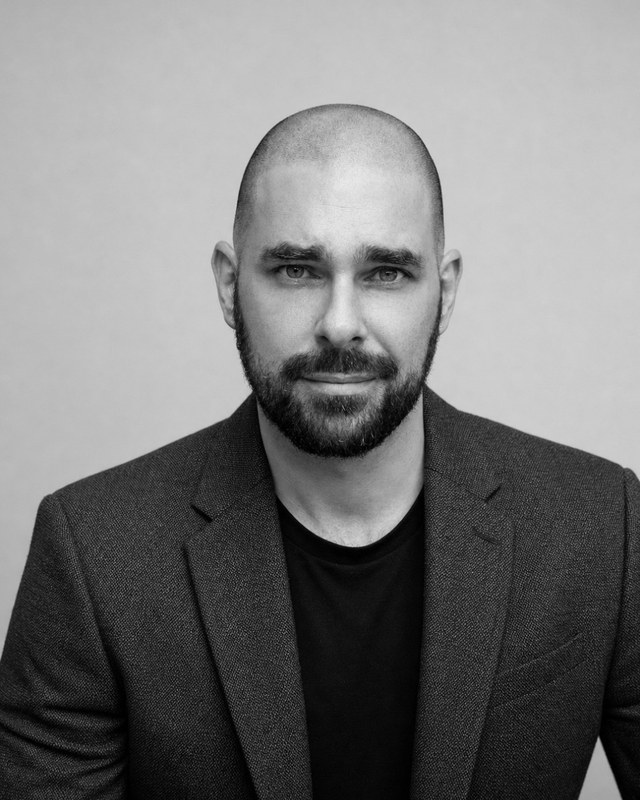
Prof. Ben Racz

Prof. Ben Racz

Co-founder. Builds the platform and is responsible for delivery, records and pricing.

Platform & deliveryQuantitative researchCarnegie Mellon

He was Professor of the Practice at the College of Engineering at Carnegie Mellon University, where he taught Advanced Quantitative Finance and Algorithmic Trading to MSc students.

He is the founder and Managing Director of Algorithmic Sciences, a scientific research and consulting firm. Earlier he co-founded a data-driven growth consultancy, a data-science based wholesale trading company and an information security firm.

More about Ben at benracz.com

Questions about this course

Is there a certificate?

Yes. Every learner who finishes the course receives a certificate in their own name, and every module ends with a recorded multiple-choice questionnaire, so the certificate sits on top of a per-person training record. The certificate documents in-company training; it is not a professional qualification or an accreditation, and your quality or human-resources manager sets the pass mark and decides when a module is retaken.

How long does the course take?

8 modules, each in three lengths: a 10-minute briefing, a 25-minute standard run and a 50-minute expanded walk-through. The whole course takes 1 h 20 min in the briefing length and 6 h 40 min in the expanded length. People take the length their role needs, and every length ends with the same recorded questionnaire, so the training record is complete either way.

Who should take this course?

It is written for Japan sales. Owners, managers and sales staff hear the briefing length, regulatory, quality and business-development staff take the standard run, and the people who run the procedure every day get the expanded version. One licence covers one named person on this course for a year, so the same title can be rolled out across a whole team at once.

Is this training accepted as a GMP training record by an auditor?

EU GMP Chapter 2 and 21 CFR 211.25 require documented, effective training, and that is what the course produces: a recorded multiple-choice result per module and per person, a certificate per learner and a transcript of what was taught. No provider can promise acceptance by a specific inspector; the record is built to answer what inspectors ask for, and your quality manager decides the pass mark.

How is it delivered and how fast?

The course arrives as audio files with a companion workbook, a full transcript and the questionnaire per module, within 72 hours of your payment arriving. You host the files on your own system or share them as you like; there is no platform to log into and no learner management system to set up. The free sample module arrives on request, before any purchase.

What does it cost per learner?

The list price is 9 euros per module, per learner, per year, so this course is 72 euros for one person for twelve months. The price per learner falls as more people take the same course: 10 learners pay 10 percent less and the discount keeps growing to 50 percent at 1000 learners. Type a number on the price panel and the yearly total appears.

Get this course for your team

One licence is one person on this course for a year. All three lengths, the workbook, the certificate and the training record are included in every purchase. Pick how many people, add it to the cart, and you have an invoice in your inbox.

Free sample module

Hear one full module before you spend a cent. Send your company and the role you want trained, and a complete sample module comes back with its workbook and transcript.

Connect on WhatsApp

or email [email protected], or ask for a written quote for your team