
PharmaLectures.com

Courses › Pharma training by country › Negotiating across Europe: six national styles, for Pakistani, Bangladeshi and Vietnamese teams

Negotiating across Europe: six national styles, for Pakistani, Bangladeshi and Vietnamese teams

Your export team closes European deals instead of losing them to a missed cue.

  • 8 audio modulesthree lengths each
  • 1 h 20 min to 6 h 40 minbriefing to expanded
  • Workbook, transcript, certificateand a recorded quiz per module
  • Pakistan, Bangladesh and Vietnam companieswho it is written for

Why this training matters

Your business development manager reads a long silence from a German buyer as a no, and cuts the offer on the spot. The buyer was waiting for the technical data, and it never arrives. The tender window closes and the distribution slot goes to a competitor.

What changes after this course

Your team arrives in Munich, Paris or Milan knowing what each buyer expects, and answers in the form that buyer trusts. Your team prepares a written pre-meeting brief for each city and buyer before the trip.

Watch the pitch

3:43 on how an audio course is bought, listened to and recorded. Full screen, one click.

Watch the pitch3:43, full screen, one click

What this course gives your people

Your sales director stops asking why the German buyer went quiet after the pitch. The statistical appendices are already in the folder, because your team knows that buyer wants raw data first. In Paris, your people build each argument in the order the procurement board follows, and the debate turns into an agreement.

Your export manager stops pushing Italian distributors to sign on day one. The early meetings go to trust, and the deal holds when delivery is tested later. In Madrid, your representative spots who really decides and directs each answer to that person instead of the loudest voice.

In Stockholm, your team drops the sales rhetoric and states facts plainly, because Swedish committees tend to value transparency over exaggeration. With Polish and other Eastern European distributors, your staff brings tangible supply chain evidence to the first meeting, so reliability is shown rather than claimed.

Delegates from Pakistan, Bangladesh and Vietnam adjust their meeting habits before they board the plane. They set aside the hierarchical protocol that works at home and speak clearly and directly to a flat European organization. Their polite deferrals stop being read as weakness.

Who needs this training

  • Head of International Sales

    Before a European tour, you send a team that already knows the German buyer wants data first and the French partner expects formal titles. Fewer meetings end in silence, and fewer follow-ups go unanswered.

  • Business Development Manager for Europe

    In Milan and Madrid, you stop guessing who can sign. You spend the early meetings building trust, then ask for the signature at the moment it is welcome.

  • Senior Account Executive for Export

    When a Nordic buyer asks a direct question, you answer with facts and a clear no where needed, instead of the polite deferral that reads as weakness in Stockholm.

  • Regulatory Affairs Liaison

    When a European distributor asks about your operations, you answer plainly instead of hesitating, and you know what an Eastern European buyer wants to see in the first meeting.

Roles: Owner, CEO and board, Business development and export sales, Finance, pricing and tenders

Businesses: every kind of pharma company

Countries: Pakistan, Bangladesh and Vietnam

Selling into: Europe and the UK

Courses are in English. Other languages on request.

After this course your people can

  1. Hand a German procurement team the raw data and statistical appendices they expect, already in your first proposal.
  2. Order a proposal so a French review board can follow the logic step by step.
  3. Spend the early Italian meetings on trust and agree delivery timelines out loud before the contract appears.
  4. Spot the real decision maker in a Spanish meeting and address your pricing answers to that person.
  5. Present a Nordic committee with transparent facts and without exaggerated claims about production capacity.
  6. Replace a polite deferral with a clear, direct answer in a European meeting.
  7. Write a pre-meeting brief for a named city and buyer, and check your slide deck against it.

What the company gets

  • Your team stops losing European contracts to cultural slips that nobody noticed until the buyer went silent.
  • Distribution agreements in Italy and Spain reach signature sooner, because trust and delivery terms are settled in the early meetings.
  • European partners get a clear, factual account of your company when they ask about your operations.
  • Every colleague carries a written brief for the city and buyer, so the whole team is ready for the next trip.

The evidence: questionnaire, training record, certificate

EU GMP Chapter 2, section 2.11, and 21 CFR 211.25 both ask for training that is documented and shown to work. This is what each learner leaves behind.

A recorded questionnaire per module

Every one of the 8 modules ends with a multiple-choice questionnaire. The result is recorded per person with a timestamp, whichever of the three lengths the person listened to.

A per-person training record

The export lists each learner, each module, the result and the date, which is the training record EU GMP Chapter 2 and 21 CFR 211.25 ask you to keep and the first thing an inspector asks for.

A certificate per learner

Name, company, course, hours, the guideline version taught and the date. It documents in-company training; it is not a professional qualification or an accreditation.

Your pass mark, your rule

There is no fixed pass mark. Your quality or human-resources manager decides what counts as passed and when a module is retaken, exactly as your training procedure says.

Delivered within 72 hours of payment, with the workbook, the full transcript and a source for every fact in the audio.

How long it takes, by who is listening

Nobody spends a day in a classroom. Every module exists in three lengths; a person takes the length their role needs, and every length ends with the same recorded questionnaire, so the training record is complete either way.

Briefing1 h 20 min10 min a module, for executives, sales and anyone who must know the rules, not run them
Standard3 h 20 min25 min a module, for regulatory, quality and business-development staff
Expanded6 h 40 min50 min a module, for technical staff who run the procedure day to day
Who takes this courseLengthTotal time
Business development and export salesBriefing1 h 20 min
Owner, CEO and boardBriefing1 h 20 min
Finance, pricing and tendersBriefing1 h 20 min

Course outline: 8 modules

8 modules. Under each title are the three things the listener can do afterwards; the audio itself runs 10 to 50 minutes depending on the length chosen.

  1. 1Answer German directness with the precise data buyers ask for

    • Why a German procurement officer wants your raw data before your slides, and how to hand it over.
    • How to take blunt criticism of your manufacturing process as an opening for the deal, not an attack.
    • The level of detail your first proposal needs so the German buyer sees a company that is ready.
  2. 2Pass French formal reviews with arguments built step by step

    • Why using the right formal title in a Paris meeting room matters from the first minute.
    • How to order your proposal so the French partner sees the logic in the first minute.
    • What to do when your counterpart starts a debate over a minor contract clause.
  3. 3Win Italian partnerships by earning trust before you talk terms

    • Why Italian buyers spend the first meetings on the person, and what that time buys you later.
    • How to fix delivery timelines out loud so both sides leave with the same expectation.
    • When to ask for the signature and when asking tells your Italian partner you are in a hurry.
  4. 4Read Spanish non-verbal cues and reach the real decision maker

    • Why the loudest voice in a Madrid boardroom may not be the person who signs.
    • How to hear a silence that means your Spanish partner disagrees with your pricing.
    • The indirect phrase that tells you the deal is failing while the buyer still smiles and nods.
  5. 5Pitch Nordic buyers with shared facts and room for consensus

    • Why one inflated claim about production capacity can damage your credibility in Stockholm.
    • How to shape your offer for a Swedish committee that decides together.
    • What happens when you try to go around a Nordic consensus to save a few days.
  6. 6Prove your reliability to pragmatic Eastern European buyers

    • How to show a Polish distributor that your supply chain delivers, using proof they can check.
    • The tangible result to show in your first meeting so an Eastern European buyer keeps listening.
    • Why your tone needs to change as you cross from one Eastern European market to the next.
  7. 7Adapt your home communication habits before the European meeting starts

    • Why your polite deferral sounds like weakness to a direct European buyer, and what to say instead.
    • How a Pakistani, Bangladeshi or Vietnamese team adjusts to European punctuality at the first meeting.
    • What to do when your hierarchical approval chain meets a flat European company structure.
  8. 8Write a negotiation plan for your next European trip

    • How to write a pre-meeting brief tuned to the city and the buyer you will actually sit across from.
    • The lines in your slide deck that will put off buyers in one region, found before you fly.
    • Why one shared plan keeps two colleagues from making the same cultural mistake in different cities.
The founders

One of us was inspected. The other one pays for the training.

Every claim below is sourced on the about page: the medicines register, the Lithuanian Pharmaceutical Union board list, the university directory.

Justina Krukonytė-Racz

Justina Krukonytė-Racz

Co-founder. Licensed pharmacist.

GDPResponsible PersonWarehouse & logistics

Licensed pharmacist. Responsible Person at Tamro (PHOENIX group), where she led the GDP set-up of the distribution centre.

The Responsible Person is the named person the regulator holds accountable for every pallet that leaves the building.

She writes the modules around the procedures a GDP inspection checks. Board member of Lithuanian Pharmaceutical Union.

Listed in the Lithuanian medicines register as Pharmacist.
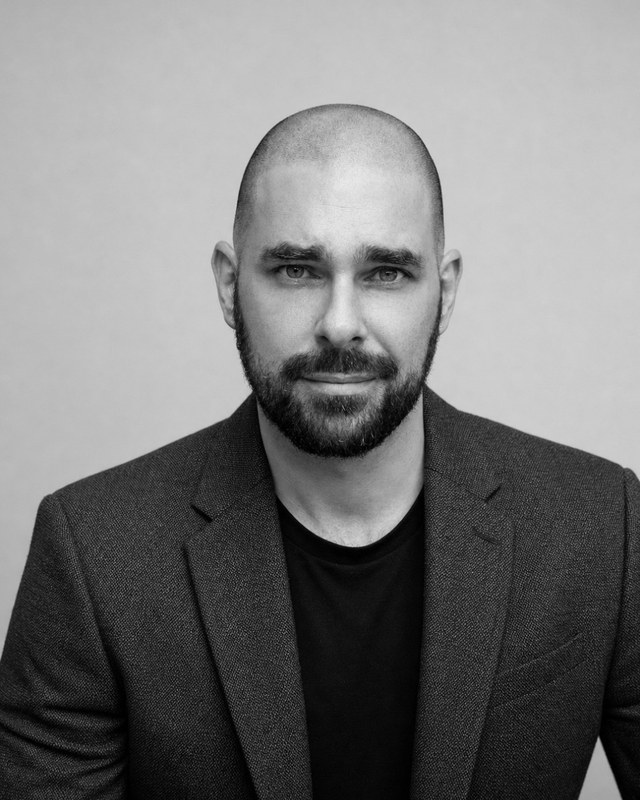
Prof. Ben Racz

Prof. Ben Racz

Co-founder. Builds the platform and is responsible for delivery, records and pricing.

Platform & deliveryQuantitative researchCarnegie Mellon

He was Professor of the Practice at the College of Engineering at Carnegie Mellon University, where he taught Advanced Quantitative Finance and Algorithmic Trading to MSc students.

He is the founder and Managing Director of Algorithmic Sciences, a scientific research and consulting firm. Earlier he co-founded a data-driven growth consultancy, a data-science based wholesale trading company and an information security firm.

More about Ben at benracz.com

Questions about this course

Is there a certificate?

Yes. Every learner who finishes the course receives a certificate in their own name, and every module ends with a recorded multiple-choice questionnaire, so the certificate sits on top of a per-person training record. The certificate documents in-company training; it is not a professional qualification or an accreditation, and your quality or human-resources manager sets the pass mark and decides when a module is retaken.

How long does the course take?

8 modules, each in three lengths: a 10-minute briefing, a 25-minute standard run and a 50-minute expanded walk-through. The whole course takes 1 h 20 min in the briefing length and 6 h 40 min in the expanded length. People take the length their role needs, and every length ends with the same recorded questionnaire, so the training record is complete either way.

Who should take this course?

It is written for Pakistan, Bangladesh and Vietnam companies. Owners, managers and sales staff hear the briefing length, regulatory, quality and business-development staff take the standard run, and the people who run the procedure every day get the expanded version. One licence covers one named person on this course for a year, so the same title can be rolled out across a whole team at once.

Is this training accepted as a GMP training record by an auditor?

EU GMP Chapter 2 and 21 CFR 211.25 require documented, effective training, and that is what the course produces: a recorded multiple-choice result per module and per person, a certificate per learner and a transcript of what was taught. No provider can promise acceptance by a specific inspector; the record is built to answer what inspectors ask for, and your quality manager decides the pass mark.

How is it delivered and how fast?

The course arrives as audio files with a companion workbook, a full transcript and the questionnaire per module, within 72 hours of your payment arriving. You host the files on your own system or share them as you like; there is no platform to log into and no learner management system to set up. The free sample module arrives on request, before any purchase.

What does it cost per learner?

The list price is 9 euros per module, per learner, per year, so this course is 72 euros for one person for twelve months. The price per learner falls as more people take the same course: 10 learners pay 10 percent less and the discount keeps growing to 50 percent at 1000 learners. Type a number on the price panel and the yearly total appears.

Get this course for your team

One licence is one person on this course for a year. All three lengths, the workbook, the certificate and the training record are included in every purchase. Pick how many people, add it to the cart, and you have an invoice in your inbox.

Free sample module

Hear one full module before you spend a cent. Send your company and the role you want trained, and a complete sample module comes back with its workbook and transcript.

Connect on WhatsApp

or email [email protected], or ask for a written quote for your team