
PharmaLectures.com

Courses › Pharma industry foundations › Business English for pharma sales: the calls, meetings and negotiations you cannot wing

Business English for pharma sales: the calls, meetings and negotiations you cannot wing

Your team speaks up in English, so deals keep moving without a translator.

Pharmaceutical sales in this course means business-to-business selling: a manufacturer, contract developer or distributor selling active substances, finished products or services to pharmaceutical companies, wholesalers and hospital buyers in Europe. It is mainly business-to-business selling, not promotion of medicines to prescribers. The work is done in English, on calls, in meetings, at trade shows and across the negotiation table, with counterparts whose questions are technical and regulatory as often as commercial. Training for it has to cover the language of the deal and the subject matter behind it at the same time.

  • 12 audio modulesthree lengths each
  • 2 h to 10 hbriefing to expanded
  • Workbook, transcript, certificateand a recorded quiz per module
  • BD, sales, marketingwho it is written for

Why pharmaceutical sales training matters

At a congress, a buyer asks your representative about the primary endpoint of your pivotal trial. The English comes out hesitant, and the buyer hears doubt about the data. Medical affairs steps in to clarify the efficacy claim, and the negotiation sits idle until they do.

What changes after this course

Your team states indications and clinical benefits in plain, precise English and keeps negotiations moving without calling for help. You hold a certificate for each learner and a training record for each person. Each module ends with a multiple-choice questionnaire.

Watch the pitch

3:43 on how an audio course is bought, listened to and recorded. Full screen, one click.

Watch the pitch3:43, full screen, one click

Pharmaceutical sales training: what this course gives your people

Your representative is asked about the primary endpoint and answers in one clean sentence, with the patient benefit first. A physician presses on safety or efficacy, and the reply stays within what your product information supports. Medical affairs stops being pulled into calls just to repair the wording.

Internal launch meetings end on time. A regional director's forecast gets challenged politely in the room, not in an angry email chain afterward. Whoever chairs opens with the decision needed, and the minutes record who agreed to what in the commercial distribution plan.

At the congress, your booth staff open conversations with a line that fits the noise and the moment. One question sorts licensing prospects from brochure collectors. Then a follow-up email names the exact conversation, and the second meeting gets booked.

In negotiation, your business development managers state minimum order quantities and tie each concession to volume. At the close, they say the agreed delivery schedule out loud and send a confirmation email. Your legal team receives a term sheet that matches what was said, so nobody reopens it.

Who needs pharmaceutical sales training

  • Global Business Development Director

    In a joint venture negotiation the English moves fast and you cannot find the gap to push back. After this course you cut in on unfavorable supply terms before the meeting ends.

  • Pharmaceutical Sales Representative

    At the hospital visit, a physician asks about the trial endpoint. You put the patient benefit first in one clear sentence, so the physician keeps listening instead of drifting away.

  • International Marketing Manager

    Your booth pitch at the congress sounds rehearsed and the leads go cold. You open naturally, and your follow-up email reminds the prospect of the exact conversation you had.

  • Regional Sales Manager

    You chair a launch meeting with colleagues in several countries. You open with the decision needed, and you bring a wandering discussion back to the timeline without offending anyone.

Roles: Business development and export sales, Marketing and communications

Businesses: every kind of pharma company

Countries: India, China, Türkiye, Korea, Japan, Taiwan, Egypt, Gulf and MENA, Brazil and Latin America, Pakistan, Bangladesh and Vietnam, United States, Europe

Selling into: any jurisdiction

Courses are in English. Other languages on request.

After this course your people can

  1. Introduce yourself and your company to a foreign executive in a few clear, professional sentences.
  2. Explain clinical efficacy data in plain English so a non-medical buyer sees the patient benefit.
  3. Answer a hostile pricing objection on a sales call in calm, professional wording.
  4. Open a virtual launch meeting by naming the decision needed, and keep participants on the agenda.
  5. State your minimum acceptable contract terms clearly before the negotiation starts.
  6. Write a follow-up email after a trade show that refers to the specific conversation and asks for a second meeting.
  7. Summarize agreed deal points out loud and in a confirmation email before the contract goes to your legal team.

What the company gets

  • Your legal team drafts final contracts faster, because the sales team hands over summaries that match what was said in the negotiation.
  • Your representatives explain technical and clinical points in clearer English, so international calls leave less room for misunderstanding.
  • Your spending on overseas trade shows produces more qualified leads, because booth staff start better conversations and follow up properly.
  • You hand customer auditors a training record that shows which course each person completed, backed by a certificate for each learner.

The evidence: questionnaire, training record, certificate

EU GMP Chapter 2, section 2.11, and 21 CFR 211.25 both ask for training that is documented and shown to work. This is what each learner leaves behind.

A recorded questionnaire per module

Every one of the 12 modules ends with a multiple-choice questionnaire. The result is recorded per person with a timestamp, whichever of the three lengths the person listened to.

A per-person training record

The export lists each learner, each module, the result and the date, which is the training record EU GMP Chapter 2 and 21 CFR 211.25 ask you to keep and the first thing an inspector asks for.

A certificate per learner

Name, company, course, hours, the guideline version taught and the date. It documents in-company training; it is not a professional qualification or an accreditation.

Your pass mark, your rule

There is no fixed pass mark. Your quality or human-resources manager decides what counts as passed and when a module is retaken, exactly as your training procedure says.

Delivered within 72 hours of payment, with the workbook, the full transcript and a source for every fact in the audio.

How long it takes, by who is listening

Nobody spends a day in a classroom. Every module exists in three lengths; a person takes the length their role needs, and every length ends with the same recorded questionnaire, so the training record is complete either way.

Briefing2 h10 min a module, for executives, sales and anyone who must know the rules, not run them
Standard5 h25 min a module, for regulatory, quality and business-development staff
Expanded10 h50 min a module, for technical staff who run the procedure day to day
Who takes this courseLengthTotal time
Business development and export salesBriefing2 h
Marketing and communicationsBriefing2 h

Pharmaceutical sales course outline: 12 modules

12 modules. Under each title are the three things the listener can do afterwards; the audio itself runs 10 to 50 minutes depending on the length chosen.

  1. 1Make a first impression in English that buyers take seriously

    • The opening sentence that tells a foreign executive who you are and why they should listen.
    • How to address a chief medical officer so you sound respectful, not stiff and not too familiar.
    • Why small talk can cost you credibility, and the line that moves into business instead.
  2. 2Open a sales call and build rapport in the first minute

    • How to state the purpose of your call in one sentence so a busy physician keeps listening.
    • The questions that reveal when a hospital buyer can actually decide and buy.
    • What to do when the prospect goes silent right after you state your purpose.
  3. 3Present your product so non-clinical buyers see the patient benefit

    • How to put the patient benefit before the data so a non-clinical buyer sees why it matters.
    • The plain-English way to explain a pharmacokinetic profile to a hospital administrator.
    • The short phrase that turns clinical results into commercial value without a jarring jump.
  4. 4Answer pricing and regulatory objections without losing the call

    • What to say when a buyer tells you your biologic costs more than the local biosimilars.
    • How to rephrase a hostile regulatory question so you answer on your terms and stay calm.
    • The sentence that pauses an interruption and brings the talk back to patient outcomes.
  5. 5Speak up in business meetings before the decision is made

    • How to enter a fast English discussion without waiting for someone to invite you.
    • How to disagree with a regional director's forecast in words that are polite and firm.
    • The phrase that brings a wandering meeting back to your launch timeline.
  6. 6Run English pharma meetings that end with a decision

    • How to open a virtual meeting so everyone knows which decision is needed today.
    • When to cut in on a rambling stakeholder, and the words that keep the relationship intact.
    • What to do when key people stay silent at the last call for objections.
  7. 7Start conversations at your booth and spot serious prospects

    • The opening line that stops a passing delegate at your booth without sounding rehearsed.
    • How to describe your manufacturing capacity in two sentences over exhibition hall noise.
    • The question that separates a serious licensing prospect from someone collecting brochures.
  8. 8Write follow-ups after a congress that earn a second meeting

    • How to write a follow-up email that gets a reply because it names the talk at your booth.
    • How to ask for a video meeting without sounding desperate for the business.
    • The subject line that gets a chief executive to open your message days after the congress.
  9. 9Hold your terms in a pharmaceutical sales negotiation

    • How to state your minimum order quantities so buyers stop pushing for terms you cannot meet.
    • How to turn down a low offer on your active pharmaceutical ingredient and keep talks alive.
    • The conditional phrases that let you discuss price tiers without promising a discount.
  10. 10Trade every concession for volume with advanced negotiation moves

    • How to defuse a demand for sole distribution rights with calm, neutral wording.
    • Why every price concession should be tied to volume, and the sentence that does it.
    • What to do when the other side changes the terms just before the final review.
  11. 11Close the deal and confirm terms so nobody can dispute them

    • How to summarize agreed delivery schedules out loud so nobody says later they misunderstood.
    • The confirmation email wording that records the agreed terms the same way for both sides.
    • The handover wording that gives your legal team finished terms with nothing left open.
  12. 12Adapt your style to buyers from different cultures

    • When to soften your directness with buyers in Asian markets so nobody loses face.
    • How to hear a polite hesitation as a no from buyers who think saying no is rude.
    • The greeting that shows respect to senior executives from different regions.
The founders

One of us was inspected. The other one pays for the training.

Every claim below is sourced on the about page: the medicines register, the Lithuanian Pharmaceutical Union board list, the university directory.

Justina Krukonytė-Racz

Justina Krukonytė-Racz

Co-founder. Licensed pharmacist.

GDPResponsible PersonWarehouse & logistics

Licensed pharmacist. Responsible Person at Tamro (PHOENIX group), where she led the GDP set-up of the distribution centre.

The Responsible Person is the named person the regulator holds accountable for every pallet that leaves the building.

She writes the modules around the procedures a GDP inspection checks. Board member of Lithuanian Pharmaceutical Union.

Listed in the Lithuanian medicines register as Pharmacist.
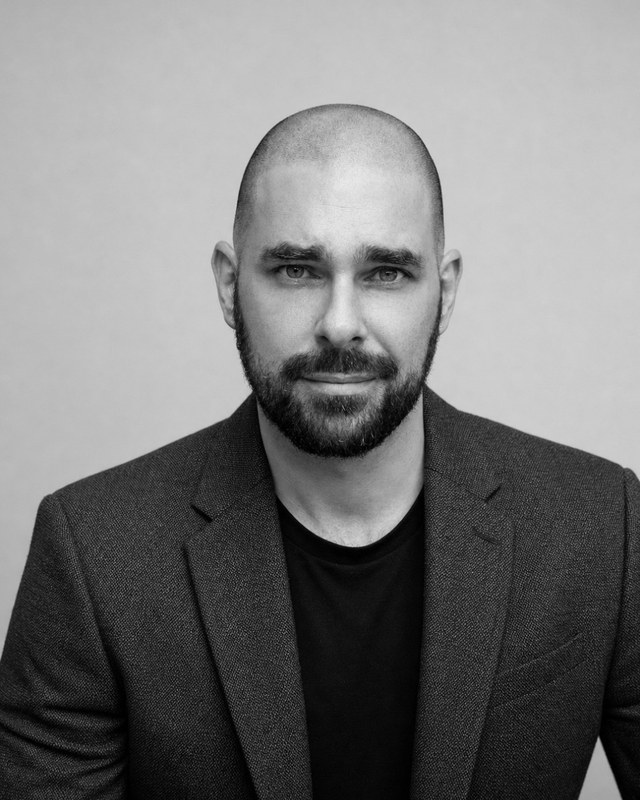
Prof. Ben Racz

Prof. Ben Racz

Co-founder. Builds the platform and is responsible for delivery, records and pricing.

Platform & deliveryQuantitative researchCarnegie Mellon

He was Professor of the Practice at the College of Engineering at Carnegie Mellon University, where he taught Advanced Quantitative Finance and Algorithmic Trading to MSc students.

He is the founder and Managing Director of Algorithmic Sciences, a scientific research and consulting firm. Earlier he co-founded a data-driven growth consultancy, a data-science based wholesale trading company and an information security firm.

More about Ben at benracz.com

Questions about pharmaceutical sales training

Is there a pharmaceutical sales certification?

No regulator in Europe or the United States issues one. Private certificates exist, mostly aimed at representatives who detail medicines to prescribers in the United States, and they carry no legal weight. For business-to-business sales to European pharmaceutical customers, what counts is the ability to answer technical and regulatory questions credibly and a training record your customer can audit. Each participant receives a completion certificate that goes into that record.

What does B2B pharma sales training cover?

It covers the conversations a supplier actually has: the first call with a procurement or sourcing manager, the technical meeting with quality and regulatory staff, the trade-show conversation that has three minutes to earn a follow-up, the tender clarification, and the negotiation on price, lead time and quality agreement terms. This course does it in English, with the vocabulary and the sentence patterns for each situation, module by module.

Is there a certificate?

Yes. Every learner who finishes the course receives a certificate in their own name, and every module ends with a recorded multiple-choice questionnaire, so the certificate sits on top of a per-person training record. The certificate documents in-company training; it is not a professional qualification or an accreditation, and your quality or human-resources manager sets the pass mark and decides when a module is retaken.

How long does the course take?

12 modules, each in three lengths: a 10-minute briefing, a 25-minute standard run and a 50-minute expanded walk-through. The whole course takes 2 h in the briefing length and 10 h in the expanded length. People take the length their role needs, and every length ends with the same recorded questionnaire, so the training record is complete either way.

Who should take this course?

It is written for BD, sales, marketing. Owners, managers and sales staff hear the briefing length, regulatory, quality and business-development staff take the standard run, and the people who run the procedure every day get the expanded version. One licence covers one named person on this course for a year, so the same title can be rolled out across a whole team at once.

Is this training accepted as a GMP training record by an auditor?

EU GMP Chapter 2 and 21 CFR 211.25 require documented, effective training, and that is what the course produces: a recorded multiple-choice result per module and per person, a certificate per learner and a transcript of what was taught. No provider can promise acceptance by a specific inspector; the record is built to answer what inspectors ask for, and your quality manager decides the pass mark.

How is it delivered and how fast?

The course arrives as audio files with a companion workbook, a full transcript and the questionnaire per module, within 72 hours of your payment arriving. You host the files on your own system or share them as you like; there is no platform to log into and no learner management system to set up. The free sample module arrives on request, before any purchase.

What does it cost per learner?

The list price is 9 euros per module, per learner, per year, so this course is 108 euros for one person for twelve months. The price per learner falls as more people take the same course: 10 learners pay 10 percent less and the discount keeps growing to 50 percent at 1000 learners. Type a number on the price panel and the yearly total appears.

Get this course for your team

One licence is one person on this course for a year. All three lengths, the workbook, the certificate and the training record are included in every purchase. Pick how many people, add it to the cart, and you have an invoice in your inbox.

Free sample module

Hear one full module before you spend a cent. Send your company and the role you want trained, and a complete sample module comes back with its workbook and transcript.

Connect on WhatsApp

or email [email protected], or ask for a written quote for your team